Monsoon Roof Leaks, and How to Tell Storm Water From a Slab Leak
A storm rolls through, and the next morning there is a wet spot on the ceiling or the floor. Sometimes the storm did it. Sometimes a plumbing leak picked that week to show up. Here is how to tell the two apart before anyone opens a wall.
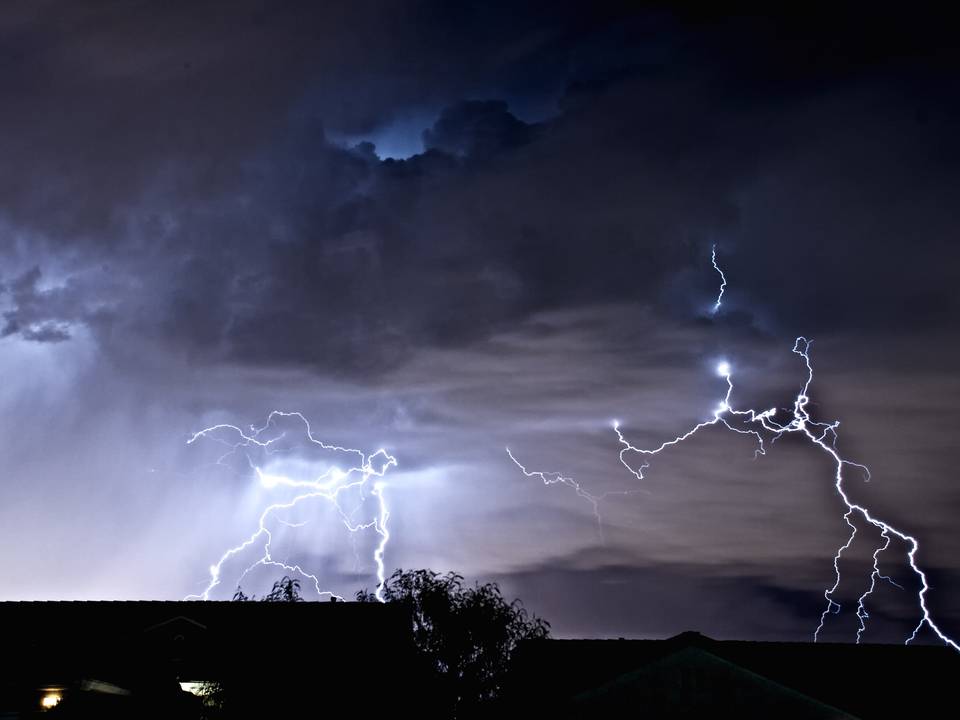
Where monsoon rain gets through a roof
Monsoon storms do not drop rain straight down. Wind pushes it sideways into gaps around roof edges, plumbing vents and the curbs that hold rooftop AC units. Hail can crack tiles and bruise shingles, and that damage often leaks on the next storm, not this one.
That is not a guess about this fall. On October 30, 2026 the National Weather Service warned of a severe thunderstorm over Fremont Street with quarter size hail and gusts up to 50 mph, and a flash flood warning covered downtown at the same time. The full record is in our Las Vegas storm history.
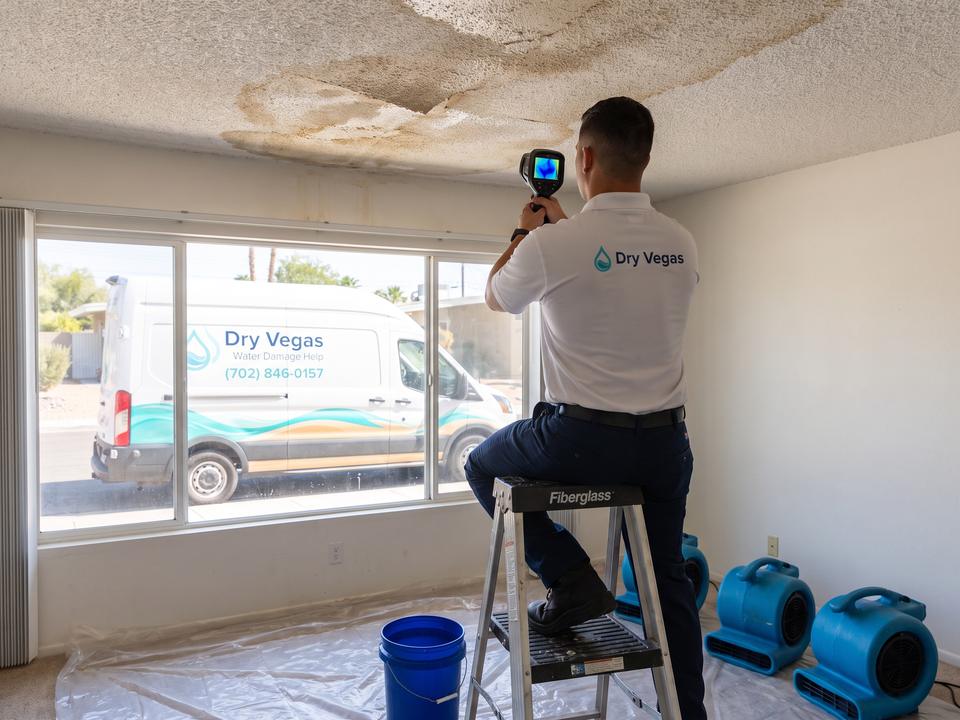
When a ceiling holds water
- Clear the room below. A ceiling that bulges after a storm can drop all at once.
- Turn off lights and fans in that room from the breaker panel, standing on a dry floor.
- Catch the drip. A bucket and a towel buy time. Do not poke the bulge unless the room is clear and you are ready for all of it.
- Photograph the stain and the outside of the roof above it if you can see it from the ground.
- Call a roofer for a tarp and a drying crew for the inside. See ceiling and roof leaks.
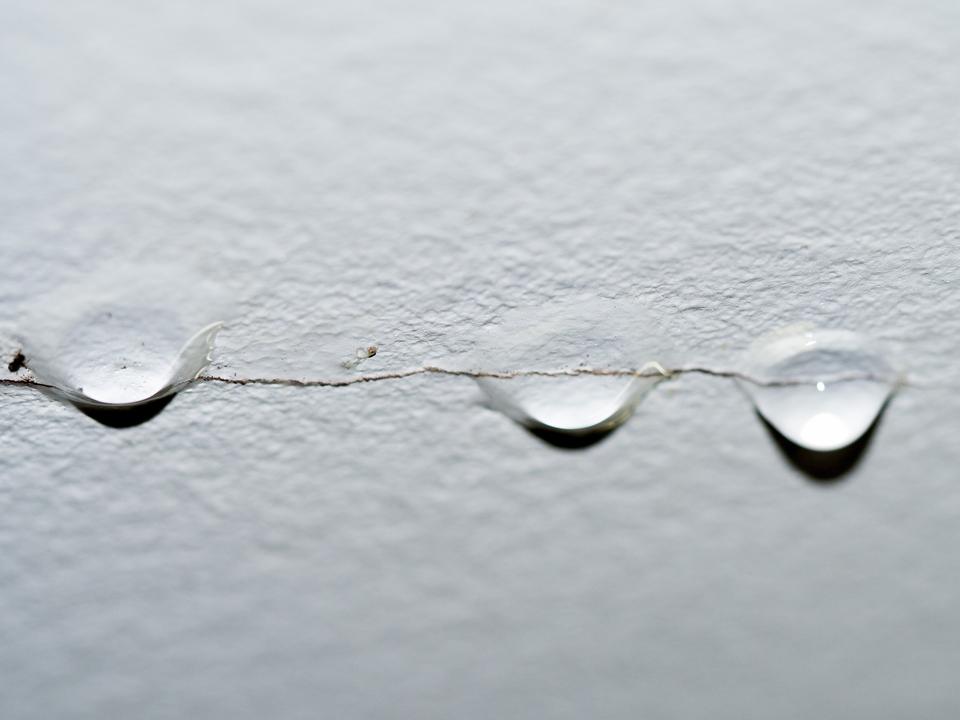
A wet floor after a storm
A wet floor the morning after rain has three likely sources. Runoff came under a door or slider. Water got in up top and ran down inside a wall to the floor. Or a plumbing line under the slab started leaking and the timing is a coincidence.
- Runoff leaves a trail. Look for dirt or a line of debris leading from a door, and wet carpet that is wettest at the edge.
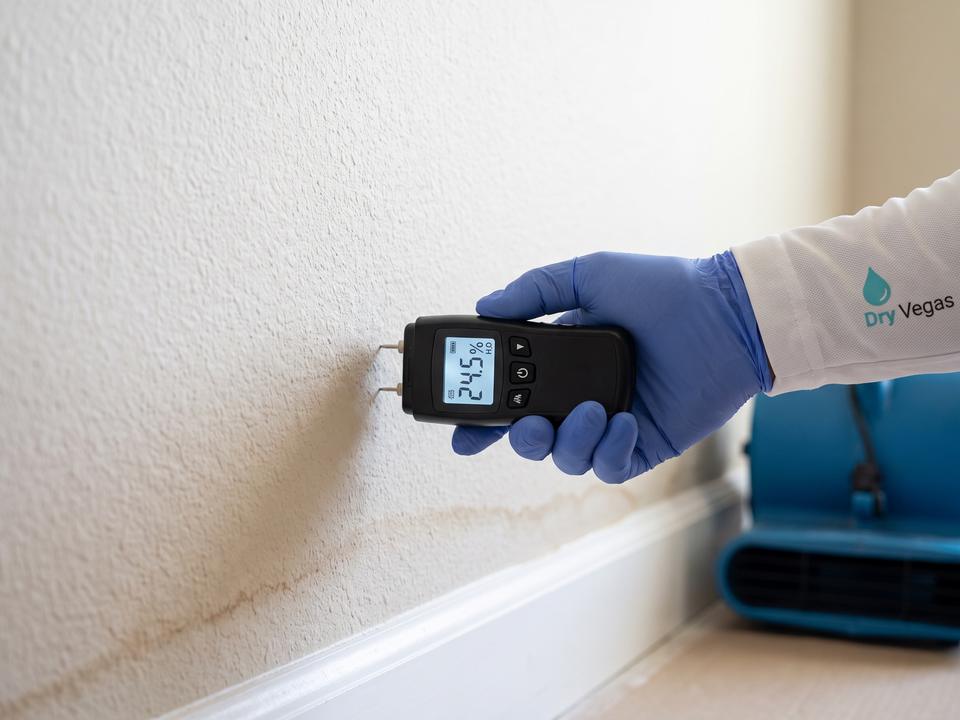
- Water from above stains first. Check the wall and baseboard above the wet spot for a tide line or bubbling paint.
- A slab leak keeps going in dry weather. If the spot is still growing two dry days later, or the floor feels warm over a hot line, suspect plumbing.
The two minute meter test
The water meter settles it. Turn off every tap, the dishwasher, the washer, the ice maker and the sprinklers. Open the meter box near the curb and watch the small leak dial. If it spins with everything off, water is moving through your pipes, and the storm is not the whole story. Close the main valve at the house and look again. Still moving means the leak is outside, between the meter and the house. Stopped means it is inside.
More signs and what a plumber does next are in our slab leak guide and on the slab leak damage page.
Normal rain by month at the Las Vegas airport, with October 2026
Why central Las Vegas homes see both
In the central valley the houses are old by Las Vegas standards. Census estimates put the median build year at 1971 in ZIP 89107, 1974 in 89101 and 1976 in 89104. Older roofs meet more storms, and older supply lines have carried very hard water for decades. LVVWD lists its water at 16 to 17 grains per gallon and advises replacing plumbing parts routinely.
So a storm week is a good week to check both. Look at the ceiling after every big rain, and read the meter once a season.
Roofer, plumber or drying crew first
Stop the water first. A roofer tarps or repairs the roof. A plumber finds and fixes a slab line. Drying can start the same day the source is stopped, and EPA says to dry within 24 to 48 hours.
The source also steers the claim. Triple I says sudden discharge from plumbing is covered on most policy forms, damage from poor upkeep is not, and flood is excluded from standard home policies. Write down what you found, when, and keep the roofer's or plumber's written finding. See claim help.
- Las Vegas
- Henderson
- North Las Vegas
- Boulder City
- Paradise
- Spring Valley
- Enterprise
- Sunrise Manor
- Whitney
- Summerlin South
- Summerlin
- Centennial Hills
- Lone Mountain
- The Lakes
- Green Valley
- Anthem
- Seven Hills
- Lake Las Vegas
- Aliante
- Mountain's Edge
- Southern Highlands
- Rhodes Ranch
- Downtown Las Vegas
- 18b Arts District
- Las Vegas High School Neighborhood
- John S. Park
- Beverly Green
- Huntridge
- Las Vegas Medical District
- Scotch 80s and Rancho Circle
- Naked City
- Historic Westside
- East Las Vegas
- Downtown North Las Vegas
- Winchester
- Las Vegas Country Club
- Paradise Palms
- Twin Lakes
Questions people ask
How do I know if a leak is from the roof or a pipe?
Can monsoon rain cause a slab leak?
Is a bulging ceiling dangerous?
Does hail cause roof leaks in Las Vegas?
Who do I call first, a roofer or a plumber?
Does insurance cover a roof leak after a storm?
Related help
- Ceiling and roof leaks
- Slab leak damage
- Structural drying and dehumidification
- Insurance claim help
- Slab Leak Signs Every Las Vegas Homeowner Should Know
- When Monsoon Water Gets Inside a Las Vegas Home
More guides
- Las Vegas storm tracker
- 5 Pipes That Freeze First in a Las Vegas Cold Snap
- Dry Vegas Is Under New Ownership and Back Serving the Valley
- What to Do After a Flash Flood Gets Into Your Las Vegas Home
- 5 Signs a Toilet Leak at the Base Reached Your Subfloor
- Las Vegas Storm History, the Floods That Hit the Valley
Service area
Serving the Las Vegas Valley
The whole Las Vegas Valley, from our office at 1517 Rainbow Meadows Dr, Las Vegas, NV 89128
Water where it should not be?
Storm water inside? Call or text. Say where it came in, when, and which rooms are wet, and you will get the first steps right away.