High Water Bill, No Visible Leak, 4 Checks in Las Vegas
Picture the first bill of the winter. The sprinklers dropped to one day a week on November 1, yet the gallons went up. Nobody sees a puddle, a stain or a wet carpet. A high water bill with no visible leak in Las Vegas is almost always a real leak you cannot see yet. The meter tells you in about two minutes, and the water district will pay some of it back if you move fast.
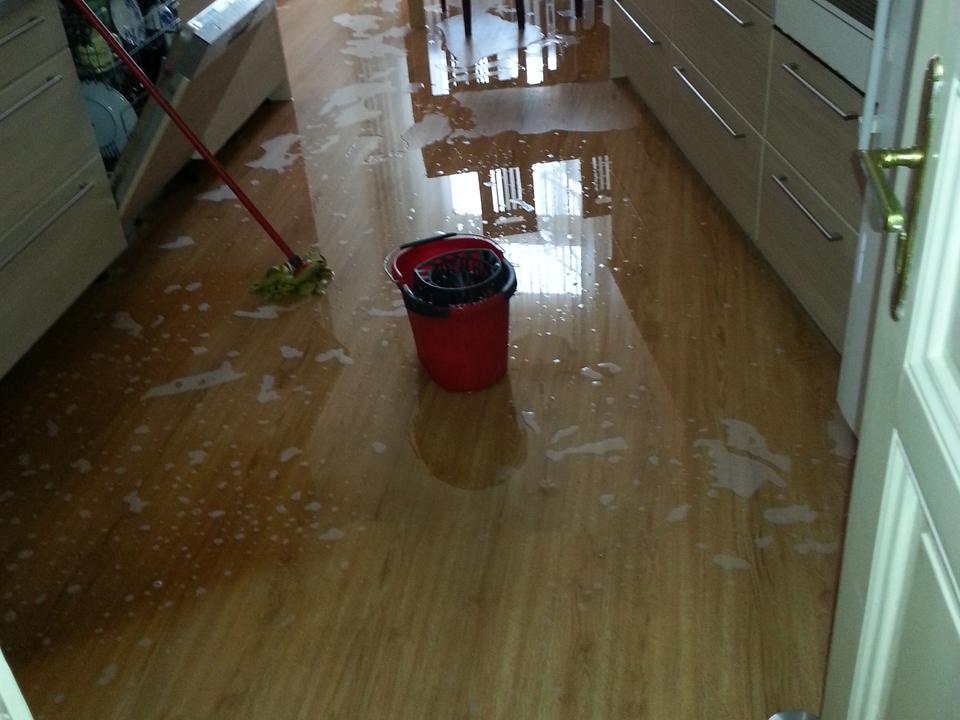
- The Southern Nevada Water Authority limits yards to one assigned watering day a week from November 1 to February 28. A bill that climbs in those months has lost its usual excuse.
- LVVWD says to turn off all water inside and out, then watch the red or white triangle on the meter. If it still moves, water is going somewhere.
- By our math on LVVWD tier rates, a toilet flapper leaking 200 gallons a day adds about $18.62 to a 5,000 gallon month. The bill is the cheap part. The water under the floor is not.
- The LVVWD leak adjustment needs leak use at least 50 percent over your normal month. A dripping faucet never gets there. A running toilet or a broken yard line usually does.
- LVVWD also pays single family owners up to 50 percent of a leak repair, capped at $2,000, with a paid invoice. Income qualified owners can get up to $10,000 through partner groups.
- The EPA says to dry water damaged areas within 24 to 48 hours. A leak the meter finds inside the house starts that clock the day you find it.
Why a Winter Bill Should Go Down
Most of the water a Las Vegas house uses in summer goes on the yard. In winter that use is cut by rule. The SNWA schedule allows three assigned days a week in fall, then one assigned day a week from November 1 through February 28. Sunday sprinkler watering is never allowed.
Indoor use barely moves with the season. LVVWD bills single family homes in four tiers, and the district says the first tier, 5,000 gallons in a 30 day cycle, covers indoor use for most homes. So a November, December or January bill should fall back toward that first tier. When it does not, something besides people is using water.
The EPA puts a number on it. A family of four that goes over 12,000 gallons in a cold month like January or February could have serious leaks. Pull the same month from last year and compare gallons, not dollars. Dollars move with rates. Gallons move with leaks.
One more check before you crawl around the house. LVVWD reads meters in thousands of gallons, and a cycle can run a few days longer or shorter than 30. A small jump can be a long cycle. A jump of thousands of gallons is not.
The Meter Test, Done the LVVWD Way
The meter is the only witness that never sleeps. LVVWD lays the test out in plain steps on its leak page, and it takes no tools beyond a flashlight. I add one thing to it. Run it twice, once with the house valve open and once closed, because the two answers point to different places.
The Two Minute Meter Test
- Everything offFaucets, toilets, the washer, the dishwasher, the ice maker, the softener and the sprinkler clock. Nobody uses water during the test.
- Watch the triangleOpen the meter box and watch the small red or white triangle for a full minute. Still means no flow. Turning means water is moving.
- Close the mainThe house shutoff is usually in the front yard near the sewer riser cap, in the garage, or at a manifold. Close it and look again.
- Read the answerStill turning with the main closed points to the buried line between the meter and the shutoff. Stopped means the leak is in the house or the yard.
- Split the yardOpen the main, close the irrigation valves, and bypass the softener. If the triangle stops, the leak is in what you just shut off.
The EPA adds a slower version that catches tiny leaks. Read the meter, use no water for two hours, then read it again. If the number changed at all, you probably have a leak.
LVVWD watches too. The district says it reaches out when it sees water flowing through a meter without a break for at least three days. Do not wait for that call. Three days of a hidden leak is already past the EPA drying window.
What a Leak Adds to the Bill
I ran common leak sizes through the LVVWD single family rates for a 5/8 inch meter. The tiers are $1.61 per 1,000 gallons for the first 5,000, $2.87 for the next 5,000, $4.27 for the next 10,000 and $6.33 above 20,000, plus a $13.88 service charge for 30 days. Each row assumes a home that would have used 5,000 gallons without the leak. Leak sizes are the EPA's own figures.
What Each Leak Adds to a 5,000 Gallon Month
- Faucet dripOne drip a second, about 247 gallons a month. Adds about $0.71. That is 5 percent over the month.
- Average home leaksThe EPA average of 9,300 gallons a year, about 764 a month. Adds about $2.19, or 15 percent.
- 50 gallons a dayThe size the EPA says 9 percent of homes have, 1,500 a month. Adds about $4.30, or 30 percent.
- Toilet flapper200 gallons a day, 6,000 a month. Adds about $18.62. That is 120 percent over the month.
- Sprinkler leakA leak the thickness of a dime, about 6,300 a month per the EPA. Adds about $19.90, or 126 percent.
- Toilet and sprinklerBoth at once, 12,300 a month. The extra water reaches the third tier and adds about $45.52.
Two things jump out. First, water is cheap here at the bottom tiers, so even a running toilet adds under $20 a month. That is why so many people let a high bill ride for months. Second, the gallons are what count for the LVVWD leak credit, and only the big leaks clear its 50 percent line.
Leak Gallons a Month Against the LVVWD 50 Percent Line
The bill is not the real cost. The Insurance Information Institute puts the average water damage and freezing claim from 2019 to 2023 at $15,400. A leak that never shows at a fixture is running into a slab, a wall or the dirt beside the foundation. Find it while it is still a bill problem.
Old Advice That Stuck
No puddle means no leak. A line under a slab or out in the yard can drain into the soil for weeks without a wet spot. Desert soil soaks it up fast. The triangle on the meter does not care whether you can see the water.
The faucet drip doubled the bill. The EPA says a faucet dripping once a second wastes more than 3,000 gallons a year. That is about 247 gallons a month by our math, or 5 percent of a 5,000 gallon month. A doubled bill needs a leak about twenty times that size. Look at toilets, the softener, the yard lines and the slab.
The water district will find it for you. LVVWD will flag continuous flow and point you to its leak page and its list of plumbers. Finding and fixing a leak on your side of the meter is still on you. That is why the district pays part of the repair instead of doing it.
Getting Money Back From LVVWD
LVVWD runs three leak programs under its Customer Assistance Programs page. The rules are strict about timing, so read them before the plumber leaves.
Leak adjustment. This credits back excess charges tied to a leak you already fixed. The district compares the leak month to the same month last year, or to the month before the leak if there is no history. Leak use must run at least 50 percent over that normal month and must already show on a bill. Repairs have to be done within 60 days of the billing date when the leak was found. You apply online within 90 days of finishing them. You get it only once in any 12 months, and it can take up to three bill cycles to show up.
Leak repair reimbursement. Single family owners can get back up to 50 percent of the repair, capped at $2,000 per event. Renters do not qualify. The district wants a paid invoice, not an estimate, a repair of at least $200, and normal use for 14 days after the fix. Starting July 1, 2025, it is once in a rolling 365 days.
Low income repair help. Income qualified LVVWD homeowners can get up to $10,000 per leak event. LVVWD does not process these. You apply through its partners, including the City of Las Vegas and the United Labor Agency of Nevada.
To stop the next one early, SNWA pays 50 percent of a listed smart water monitor or shutoff, up to $200, one per property. Henderson and North Las Vegas run their own water utilities, so customers there should check their own city for leak credits. These LVVWD programs cover the city of Las Vegas and unincorporated Clark County.
Where the Water Went
The meter test told you inside or outside. Now go hunting in the order that finds the most leaks for the least work.
Toilets first. LVVWD says more than 20 percent of gravity flush toilets leak. The EPA test is a few drops of food coloring in the tank. If color shows in the bowl after 10 minutes, the flapper leaks. A worn flapper is the usual cause, and the EPA says a new one can save up to 200 gallons a day.
The softener and the ice maker. LVVWD says to turn the softener to bypass and check the meter. If the triangle stops, the leak is in the softener. The same bypass trick works on ice machines and reverse osmosis units.
The yard. Close the irrigation valves. If the triangle stops, the leak is in the sprinkler system. Look for water pooling in the valve box and for green or bubbling patches. LVVWD also says to test the anti siphon valve once a year.
The slab and the walls. If the house is still pulling water with all of that ruled out, the line is in the floor or a wall. A warm spot on tile over a hot water line is a classic clue, laid out in our slab leak signs guide. A line in a wall shows up as soft drywall, bubbling paint or a stain low on the baseboard. Our burst pipe and leak work starts with readings around that spot.
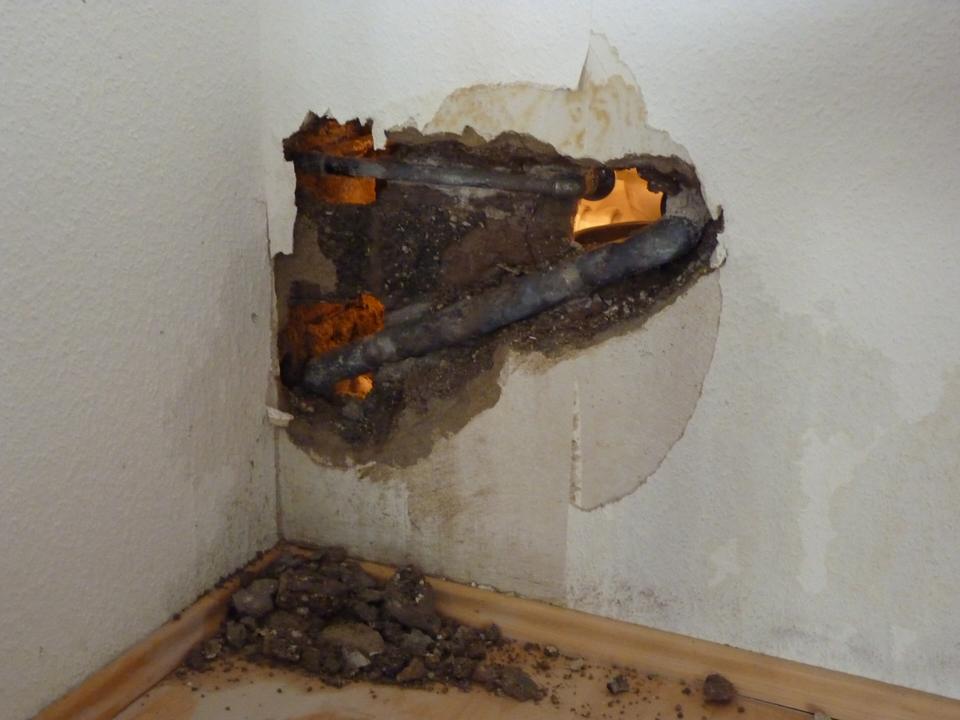
Once a plumber opens the floor or wall and fixes the line, the wet material behind it still has to dry. The EPA says within 24 to 48 hours to head off mold. Our structural drying keeps a reading log room by room, and that same log helps the reimbursement claim prove use went back to normal.
Loose Ends
Why is my water bill high all of a sudden?
In a Las Vegas winter, a hidden leak is the first thing to rule out, since yards only water one day a week from November through February. Run the meter test with everything off. If the triangle moves, it is a leak. If it sits still, compare gallons with the same month last year and check the number of days in the cycle.
How to read your water meter?
Lift the lid on the meter box and find the small red or white triangle. That is the flow indicator, and it turns whenever water moves through the meter. The big number counts gallons used. LVVWD bills that number in thousands of gallons.
Can you dispute a high water bill?
With LVVWD the path is the leak adjustment, once the leak is fixed. Use during the leak has to run at least 50 percent over your normal month, repairs must be done within 60 days, and you apply within 90 days of the repair. If no leak shows on the meter test, ask the district to recheck the read.
Does homeowners insurance pay for a high water bill?
Not for the water itself, as a rule. The Insurance Information Institute lists sudden discharge from plumbing or an appliance as covered on most policies, which means the damage the leak caused. Our insurance claim help page covers what to send.
Who do I call first?
If the meter test points inside the house, turn off the main and call a plumber to find and fix the line. Then dry what got wet before mold gets its 24 to 48 hours. Call or text Dry Vegas at (702) 846-0157 with what the meter did and where you think the water is.
Choose Dry Vegas in Google's preferred sources
Reference Links
- Las Vegas Valley Water District, find and fix leaks in your home
- Las Vegas Valley Water District, customer assistance programs, leak adjustment and repair reimbursement
- Las Vegas Valley Water District, water rates and usage thresholds
- Southern Nevada Water Authority, change your irrigation clock, seasonal watering schedule
- Southern Nevada Water Authority, smart water device rebate
- EPA WaterSense, Fix a Leak Week, checking for leaks
- EPA, news release on toilet flappers and household leaks, March 16, 2009
- EPA, a brief guide to mold, moisture and your home
- Insurance Information Institute, facts and statistics, homeowners and renters insurance
- Insurance Information Institute, which disasters are covered by homeowners insurance
Next Guide
- Burst and leaking pipes
- Slab leak damage
- Structural drying and dehumidification
- Insurance claim help
- Slab Leak Signs Every Las Vegas Homeowner Should Know
- How Long Does Water Damage Take to Dry in Las Vegas?
- What to Do When a Pipe Bursts, Minute by Minute
- 5 Readings Before You Sand a Water Damaged Hardwood Floor
- Never Caulk a Window That Leaks in Rain Before You Test It
- 6 Leak Spots to Check Before Friday's Las Vegas Rain
- Monsoon Roof Leaks, and How to Tell Storm Water From a Slab Leak
- 5 Pipes That Freeze First in a Las Vegas Cold Snap
- Dry Vegas Is Under New Ownership and Back Serving the Valley
- What to Do After a Flash Flood Gets Into Your Las Vegas Home
- 5 Signs a Toilet Leak at the Base Reached Your Subfloor
- Las Vegas Storm History, the Floods That Hit the Valley
Service area
Serving the Las Vegas Valley
The whole Las Vegas Valley, from our office at 1517 Rainbow Meadows Dr, Las Vegas, NV 89128
Water where it should not be?
Meter still moving with everything off? Call or text. Say what the triangle did with the main open and closed, and where you think the water is.