Never Caulk a Window That Leaks in Rain Before You Test It
Picture Tuesday morning. The rain was light, the driveway is already dry, and the paint under the bedroom window has a damp, swollen patch the size of a hand. The first instinct is a tube of caulk. Hold off for one day. Rain gets past a window by five different paths, and caulk fixes only one of them while it can plug the drain that handles another. A glass of water and a garden hose will tell you which path you have.

- The National Weather Service gives the valley a 50 percent chance of rain Monday night, November 16, into Tuesday morning, with showers likely again on Thursday. Its forecast discussion expects 0.02 to 0.20 inches for most of the valley from the first system.
- By our count of the airport record, Las Vegas averaged 24 days a year with measurable rain over the last 30 years. A window here can go most of a year without a real test.
- The stucco is not the waterproof layer. A plastering contractor writing in the Journal of Light Construction says leaks are more likely at windows and other openings than through the stucco itself.
- Test before you seal. His method wets the window alone for about an hour, then the stucco, then the gap between them, working from the bottom up.
- The EPA says to dry water damaged areas within 24 to 48 hours to prevent mold growth. The wall under the window is on that clock even when the sill looks dry.
- Nevada law gives a homeowner up to 10 years after a house is substantially complete to bring a construction defect claim, and it requires written notice to the builder first.
What the Forecast Says for Monday Night and Thursday
I am writing this on Sunday, November 15, under high clouds and a high near 70 F. The National Weather Service point forecast for the valley shows a 50 percent chance of rain Monday night, mostly between 10 p.m. and 4 a.m., with showers and a possible thunderstorm after that. Tuesday carries the same 50 percent chance before 10 a.m. and a slight chance into the afternoon.
The forecast discussion from the Las Vegas office, issued early Sunday, calls it a slow line of showers. The low is arriving a little later than earlier forecasts showed, and the showers may not reach southern Nevada until well after sunset. The office expects around 0.02 to 0.20 inches for all but northeast Clark County and the counties east and north of it. Then a colder system brings showers that the point forecast calls likely on Thursday. That one is expected to clear out by Friday afternoon.
No watch or warning was active for the valley when I looked on Sunday. This is light rain with light wind, 3 to 8 mph from the south Monday night in the point forecast. That matters for a window. The Department of Energy's Building America guide on window flashing says leakage rates typically increase with greater wind speeds. A window that lets water in during a calm, light rain has a real defect, not a bad night.
Friday night's system, the one I wrote the six leak spots checklist for, left only a trace at the airport. So this week is the first real test since November 1. Forecasts move, and the Dry Vegas storm tracker shows the live weather service forecast and any alert over your neighborhood.
A Las Vegas Window Gets About 24 Real Tests a Year
I went through the daily rain record for the Las Vegas airport series to see how often a window here gets wet. The counts in this section are ours. The National Weather Service NOWData tool serves the same record if you want to check them.
From 1996 through 2025, the airport averaged 24 days a year with measurable rain. Only about 11 of those days a year brought a tenth of an inch or more. The dry gaps between them are long. In 2020 the airport went 240 days in a row without measurable rain, from April 21 through December 16.
Days With Measurable Rain at the Las Vegas Airport, Last 10 Years
That is why a window leak hides so well in this valley. In a wet city, a bad window shows itself within a month of going bad. A window in Las Vegas can fail in May and stay quiet until November. Meanwhile the sun keeps working on the sealant. The home inspector group InterNACHI lists caulking at 5 to 10 years of expected life and notes that ultraviolet light from sunshine can shorten life expectancy.
So when a light rain finally shows you a damp patch, treat it as good news that arrived late. You have a wet wall and a dry forecast gap to find out why. This year has had 17 days with measurable rain through November 14, and this week may add two more.
5 Paths Rain Takes Past a Window
Most advice lists causes. What you need is the path, because each path leaves its water in a different place.
- The track fills and spills over. Sliding windows and patio doors catch water in the bottom track on purpose. Small slots called weep holes let it back out. The Building America guide says a clogged weep hole traps water in the frame, where it can eventually damage the framing, sheathing and insulation. Dust is a common plug in this valley. Caulk and paint are the other two.
- The gap between the stucco and the frame opens up. Stucco and a window frame move at different rates in the heat, and the sealant between them cracks. Plastering contractor Ron Webber, writing in the Journal of Light Construction, names this gap as one of the two likely sources when a stucco wall leaks at a window.
- The frame itself leaks at a corner. Webber's second source is the window's own frame joints. He mentions cracked welds in vinyl windows. Water from this path shows up at a bottom corner inside, and no amount of caulk on the stucco will reach it.
- The flashing behind the stucco was layered wrong. The Building America guide gives the order. A pan goes under the window first, then the window, then side flashing that laps over the pan, then top flashing that laps over the sides. It also says corners that are not properly flashed leave a vulnerable area in the drainage system. You cannot see any of this from outside, and that is why this path gets misread as bad caulk.
- The water started higher up. A crack in the stucco above, a window on the second floor, or the joint where a roof meets the wall can all feed water into the wall. It runs down behind the stucco until the top of your window stops it. Webber notes that hairline stucco cracks are mostly cosmetic and that larger cracks can let water in.
Where the Water Shows, and Where to Look First
- In the trackWater standing in the bottom track or spilling over the sill at the corners. Check the weep holes with a glass of water.
- Under the sillA damp or swollen patch on the wall below the window while the sill itself is dry. Suspect the stucco joint or a frame corner, and run the hose test.
- Top of the frameA drip from the head of the window or a stain above it. Look higher, at the flashing, a crack in the stucco or a window on the floor above.
- At the baseboardA wet baseboard or carpet edge with a dry wall above it. Check the door track nearby and the ground outside before you blame the window.
- Between the panesFog or drops sealed inside double glass. That is a failed glass seal, not a rain leak, and no wall is getting wet.
The map above is how I would read a window on the first visit. It is a starting point for the test, not a verdict.
The Hose Test, in the Right Order
Start with the cheapest check. The Building America guide's weep hole test takes a glass of water. Pour it into the track and watch outside for it to drain from the slot. If nothing comes out, push the dirt out gently with a pipe cleaner or a small brush, and scrape off any caulk that covers the slot. Then pour again.
If the track drains and the wall still got wet, wait for a dry day and bring out the hose. Webber's method in the Journal of Light Construction has three parts, and the order is the whole point.
- Wet only the window. Tape plastic sheeting over the stucco around the frame so only the window is exposed. Let water run against the window for an hour or so, long enough for the tracks to fill. A second person watches the wall inside. Water now means the window unit is the leak.
- Let everything dry. A wall that is still wet from the first part cannot tell you anything in the second.
- Wet only the stucco. Tape plastic over the window this time. Wet the stucco without getting water into the gap at the frame, and start low. Work from bottom to top, so water from a high spot cannot run down and fool you.
- Then wet the gap. Squirt water directly into the joint between the stucco and the frame. If the wall gets wet now and stayed dry before, the gap is your path.
I would use a gentle flow, not a pressure nozzle. Rain does not arrive under pressure, and a hard jet can push water through a joint that never leaks in a storm.
The fix follows the result. A leaking frame joint goes to the window maker or a window company. For a leaking gap, Webber describes cutting a groove 3/8 to 1/2 inch deep into the stucco around the frame, then setting backer rod and a polyurethane sealant. That is a job for a stucco or window contractor. He also warns that elastomeric paint will not stop a serious leak. If the wall only leaks when you wet the stucco above the window, the flashing or something higher is involved, and someone has to open the wall to see it.
What to Do With the Wet Wall Under the Window
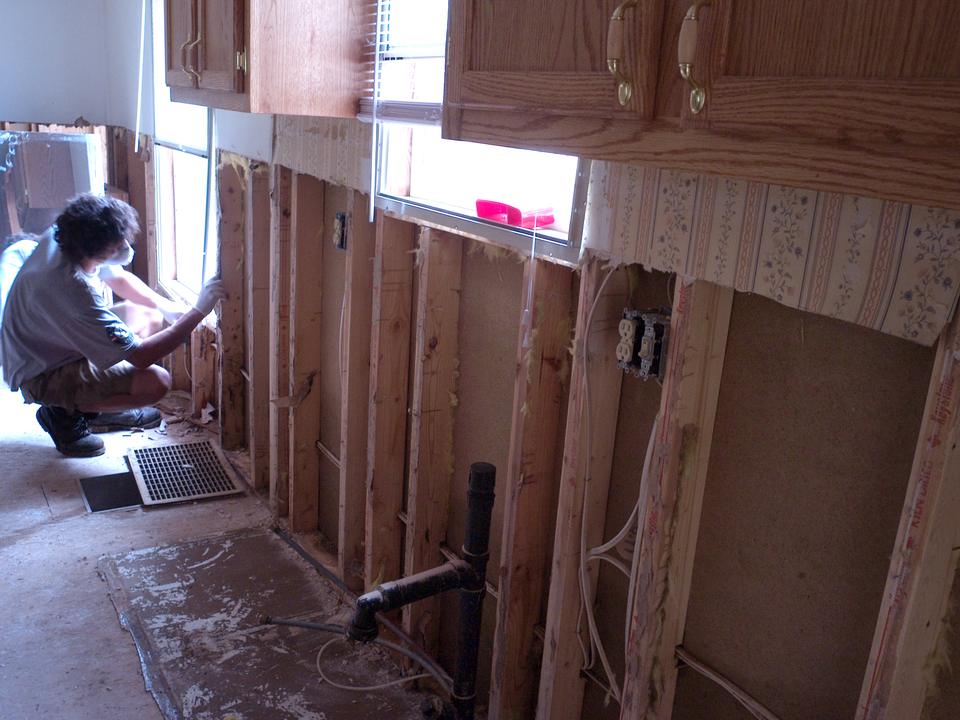
The leak and the wet wall are two separate jobs. The second one has a deadline. The EPA says it is important to dry water damaged areas and items within 24 to 48 hours to prevent mold growth.
- Photograph the wall, the sill and the track with the date, before you wipe anything.
- Soak up standing water in the track with a towel, and pull curtains, furniture and rugs away from the wall.
- Leave the paint alone. A fresh coat traps the moisture and hides the stain you need for the test. The EPA is blunt about the next stage too. Its guide says do not paint or caulk moldy surfaces.
- Get the wall read with a moisture meter. Drywall under a window can feel dry on the face while the paper on the back side and the insulation behind it are wet. Readings taken outward from the patch find its real edges.
- Keep the room closed with the air conditioning or heat running if the rain is still falling. Open windows help only when the outside air is dry.
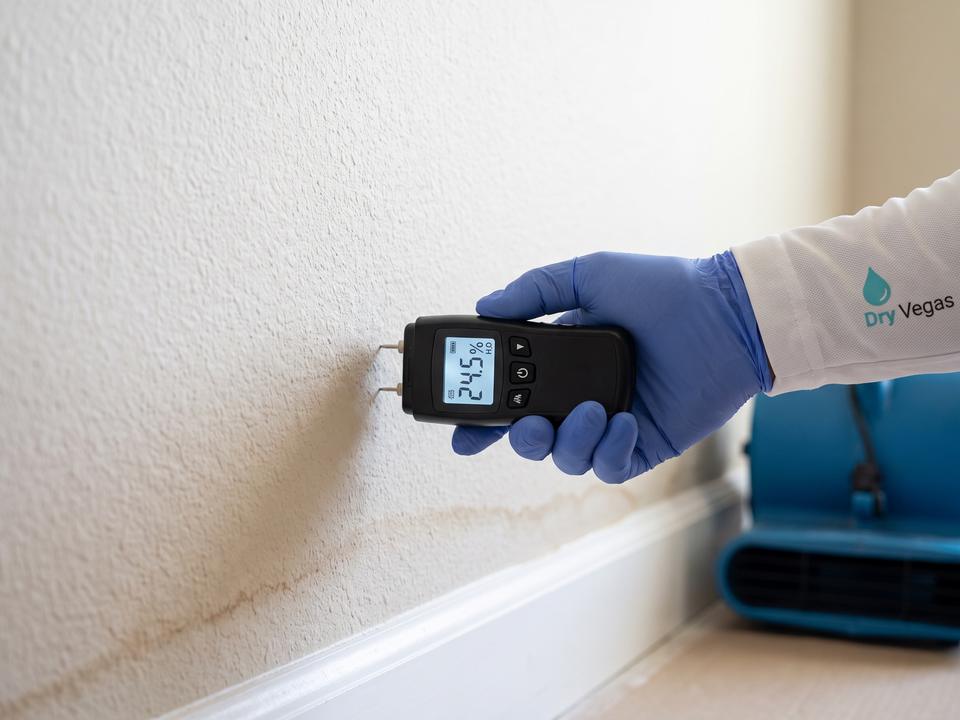
A small patch caught the same day often dries in place with air movement and a dehumidifier. A patch that has been wet in every storm for a few years is different. The drywall may crumble, and the framing below the sill needs a look. Our structural drying page shows how readings decide what stays and what comes out.
For a sense of scale, the cost site Fixr put drywall restoration at $1.50 to $3 per square foot and a small Class 1 drying job at $150 to $400 in its national figures, last updated in January 2025. Those are national numbers, not a quote. A window leak caught early usually sits at the small end.
Who Pays, the Builder, the Insurer or You
The insurer. The Insurance Information Institute lists windstorm or hail as a covered peril on every standard home policy form it shows. It also says flood damage is excluded, and that a policy will not cover damage due to lack of maintenance. A window that the wind just broke is one conversation. Sealant that aged out over ten summers can be read as maintenance. Your own policy wording controls, so read it before you call. More is on our insurance claim help page.
The builder. Nevada has its own rules for newer homes. I am not a lawyer, and this is a summary of the statute text, not advice. Chapter 40 of the Nevada Revised Statutes defines a constructional defect to include work on a new residence that is not completed in a good and workmanlike manner and causes physical damage. Before a lawsuit, the owner must give the contractor written notice by certified mail that describes the defect and the damage in reasonable detail. The contractor then has 90 days to respond in writing and may choose to repair. If the house has a builder's warranty, the statute says the owner shall diligently pursue a claim under it.
The outside limit is in NRS 11.202. No action may be brought more than 10 years after substantial completion of the improvement, with an exception for fraud. So for a house finished in the last decade, a window that leaks behind the stucco is a question for the builder and a Nevada attorney before it is a caulking project. Your photos and the hose test result are the evidence either way.
The window installer. If the windows were replaced after the house was built, the Nevada State Contractors Board says you may file a complaint with the Board up to four years after completion of the work.
The owner. Clearing weep holes, renewing aged sealant and keeping stucco cracks sealed are upkeep, and upkeep falls to you. They are also the three cheapest fixes named above.
Old Advice That Stuck
Run a bead of caulk around the whole window. Some of those openings are drains. The Building America guide warns that weep holes get clogged when they are caulked over, and then the track has nowhere to send its water. Seal the joint that failed the test. Leave the drains open.
Stucco is waterproof. Webber writes that a properly installed three coat stucco wall with a drainage plane and flashing should keep 99 percent of the water out of a building. The last part is designed to get behind the stucco, run down the drainage plane and exit through the perforated strip at the base of the wall. The layers behind the stucco do the real waterproofing.
The leak is where the stain is. Water follows framing and the back of the stucco before it shows. A stain at the top corner of a window can start at a crack several feet above it. That is the reason the hose test starts low and climbs.
It only leaks in big storms, so it can wait. In a valley with about 24 rain days a year, waiting for the next big storm can mean waiting until the drywall has been wet five or six times. Each wetting lands on the same studs. A light rain like the one in this week's forecast is the cheap time to find out.
Loose Ends
How much does it cost to fix a window leak?
The path sets the price, so one number would mislead you. Clearing a weep hole costs a pipe cleaner. Resealing the stucco joint is a small contractor visit. Flashing behind the stucco means opening the wall around the window, and that is the expensive one. The inside is separate. Fixr's national figures put drywall restoration at $1.50 to $3 per square foot.
Can you reseal a window without replacing it?
Yes, when the test points at the joint between the stucco and the frame. The repair Webber describes keeps the window in place and rebuilds that joint with backer rod and polyurethane sealant. Replacement makes sense when the frame's own corners leak or the glass seal has failed.
Will insurance cover a window leak?
Sometimes. Storm damage from wind or hail is a covered peril on standard policy forms, the Insurance Information Institute says. Damage due to lack of maintenance is not covered, and flood is excluded. Report it promptly, send dated photos and let the adjuster decide.
Why does my window only leak when the wind blows?
Wind pushes rain sideways into joints that a straight down rain never touches. The Building America guide says leakage rates typically increase with greater wind speeds. Note which side of the house faces the wind when it leaks. That detail narrows the test to one wall.
Does a sliding glass door leak the same way?
Mostly, yes. A slider has the same bottom track and the same weep holes as a sliding window, and a longer threshold. Run the glass of water test on the track first. InterNACHI's chart gives exterior sliding doors about 20 years before the rollers and track need repair or replacement.
Who do I call first?
Stop the water first, then dry the wall. A window or stucco contractor handles the leak path. If drywall, a sill or the floor under the window got wet, call or text Dry Vegas at (702) 846-0157 and say which window, which side of the house it faces, and when you first saw it.
Choose Dry Vegas in Google's preferred sources
Reference Links
- National Weather Service Las Vegas, point forecast for the valley
- National Weather Service Las Vegas, area forecast discussion
- National Weather Service Las Vegas, NOWData daily climate records
- U.S. Department of Energy Building America Solution Center, clean window weep holes
- U.S. Department of Energy Building America Solution Center, fully flashed window and door openings
- Journal of Light Construction, Ron Webber, leaky stucco, March 2008
- InterNACHI, standard estimated life expectancy chart for homes
- EPA, a brief guide to mold, moisture and your home
- Insurance Information Institute, which disasters are covered by homeowners insurance
- Nevada Legislature, NRS Chapter 40, constructional defects, sections 40.600 to 40.695
- Nevada Legislature, NRS 11.202, actions for deficiency in construction
- Nevada State Contractors Board, working with contractors
- Fixr, water damage restoration cost, January 2025
Next Guide
- Ceiling and roof leaks
- Structural drying and dehumidification
- Mold inspection and remediation
- Insurance claim help
- When Monsoon Water Gets Inside a Las Vegas Home
- Does Homeowners Insurance Cover Water Damage in Nevada?
- 6 Leak Spots to Check Before Friday's Las Vegas Rain
- Monsoon Roof Leaks, and How to Tell Storm Water From a Slab Leak
- 5 Pipes That Freeze First in a Las Vegas Cold Snap
- Dry Vegas Is Under New Ownership and Back Serving the Valley
- What to Do After a Flash Flood Gets Into Your Las Vegas Home
- 5 Signs a Toilet Leak at the Base Reached Your Subfloor
- Las Vegas Storm History, the Floods That Hit the Valley
Service area
Serving the Las Vegas Valley
The whole Las Vegas Valley, from our office at 1517 Rainbow Meadows Dr, Las Vegas, NV 89128
Water where it should not be?
Rain came in at a window? Call or text. Say which window, which way it faces, and how far the wet patch has spread, and you will get the first steps right away.